Feeding kids well builds habits that last a lifetime. The benefits are clear and well documented: better focus in the classroom, more energy throughout the day, and a stronger connection to the land around them. But making that simple idea work in schools is where things get complicated.
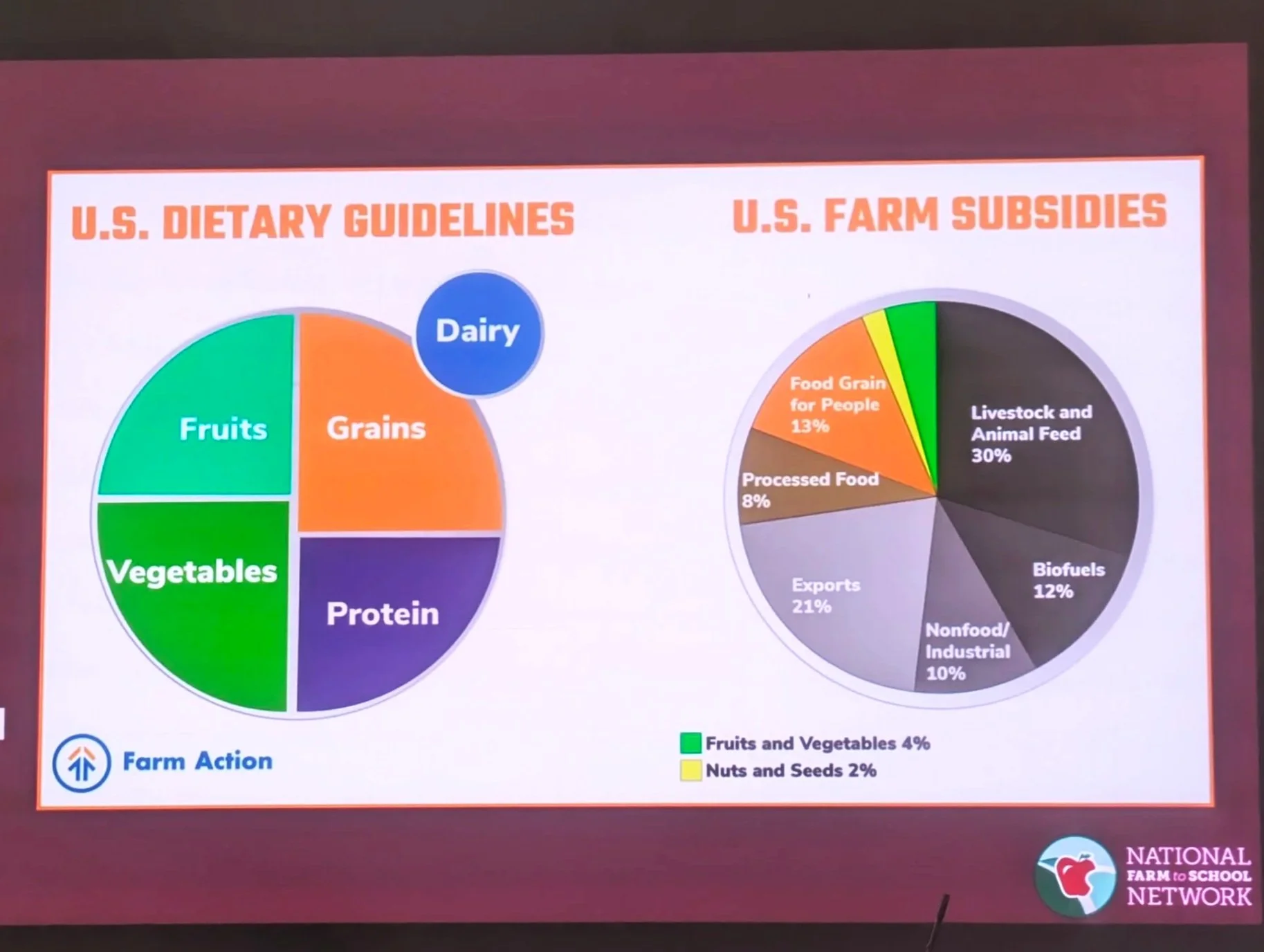
Slide from Sunny Baker, Senior Director of Programs and Policy at the National Farm to School Network.
According to data from Farm Action and the National Farm to School Network, federal dietary guidelines tell us to fill about half our plates with fruits and vegetables, yet only 4 percent of U.S. farm subsidies go toward growing those crops.
This year, two USDA programs that helped schools and food banks buy local food were cut: Local Food for Schools and Local Food Purchase Assistance. Together, they represented more than $1 billion in funding.
At the same time, new Buy American rules from the USDA will soon require schools to source at least 90 percent of their food from U.S. producers. During winter months, crops like cucumbers and cherry tomatoes are often imported, so those rules tighten supply just as funding for local purchasing disappears.
Farms like ours can grow those foods year round, but to be a sustainable business, we need to charge nearly four times what schools can afford through industrial distributors.
And that’s the heart of the tension. We all want schools to serve meals that are fresh, kid friendly, and locally sourced. Without the right programs or budgets, even the most committed food service directors are left with few options.
Progress Worth Celebrating
Despite systemic hurdles, there are bright spots worth noticing. October was Farm to School Month, and we spent it visiting six schools in the area. We handed out greenhouse-grown cucumbers and tomatoes, answered questions from curious students, and watched them reach for seconds. The food disappeared fast. The curiosity didn’t.
Those visits reminded us that real change often starts small, one crunchy bite at a time. It’s easy to talk about policy from afar, but seeing kids light up when they taste a tomato that never left Wyoming brings the issue back to what matters.


Later in the month, we joined food service directors, nonprofit leaders, and other producers at the first Wyoming Farm to School Conference in Casper. The conversations were candid about what’s working and what isn’t. First Lady Jennie Gordon opened the event by sharing how the Wyoming Hunger Initiative is helping connect local producers with schools and pantries, building partnerships that can outlast any single term or grant cycle.
No one pretended the solutions were simple, but the energy in the room said a lot. The people closest to the problem, school nutrition teams, local farmers, and community organizers, are the ones shaping what comes next.
We left more aware of the challenges but no less determined to find creative solutions. Because even in a system built for scale, there’s still room for something local, fresh, and distinctly Wyoming to take root.