
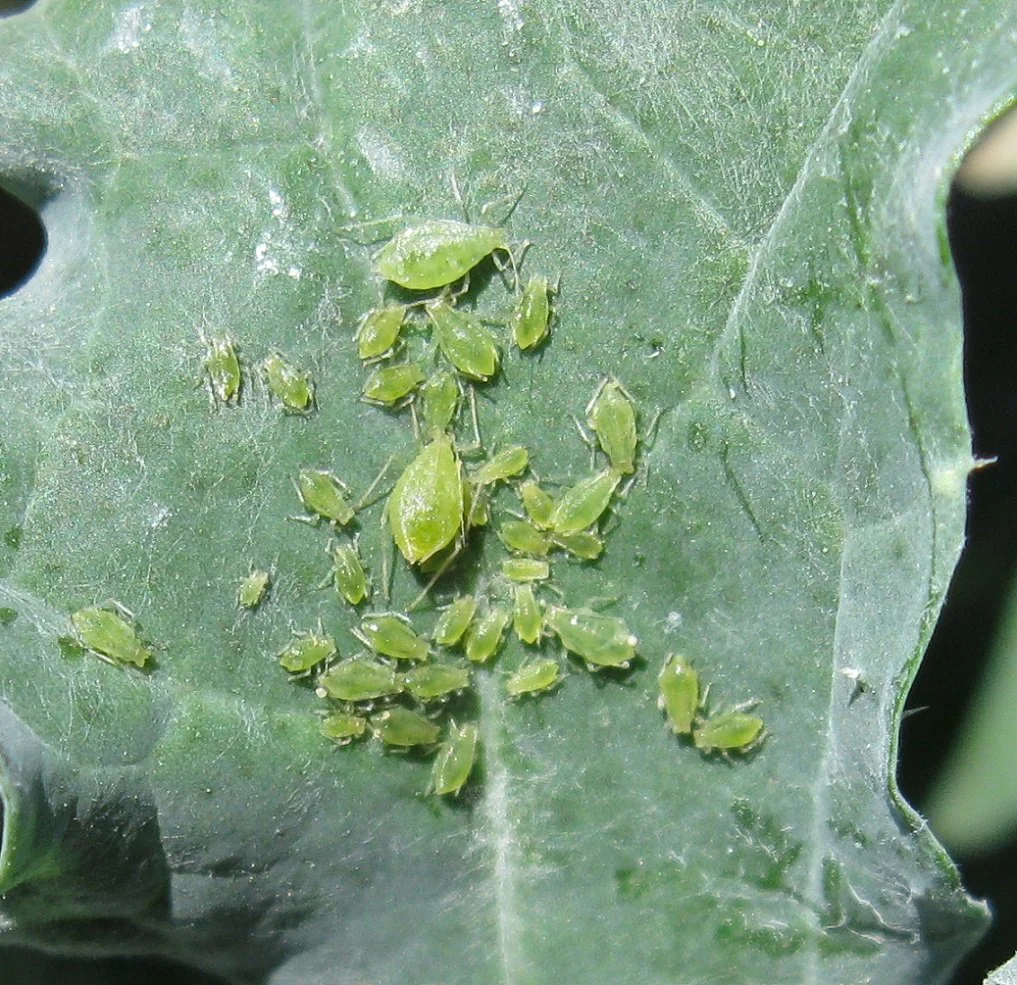
Aphids gobbling up a leaf
Summer brings the sunshine. It also brings the pests.
When temperatures rise, so do aphid populations. And the mites show up fast. These pests suck the life out of tender leaves, stunt new growth, and make it harder to bring you the clean, vibrant food you expect.
The solution? Pest management that is predominantly OMRI-certified, meaning it’s deemed safe for use by the Organic Materials Review Institute.
That includes not only safe solvents, but a team of beneficial insects that prey on the pests you don’t want. These warrior bugs help keep the greenhouse in balance without harming the crops.
Meet a few of these important crew members.
Green Lacewing Larvae (Chrysoperla rufilabris)
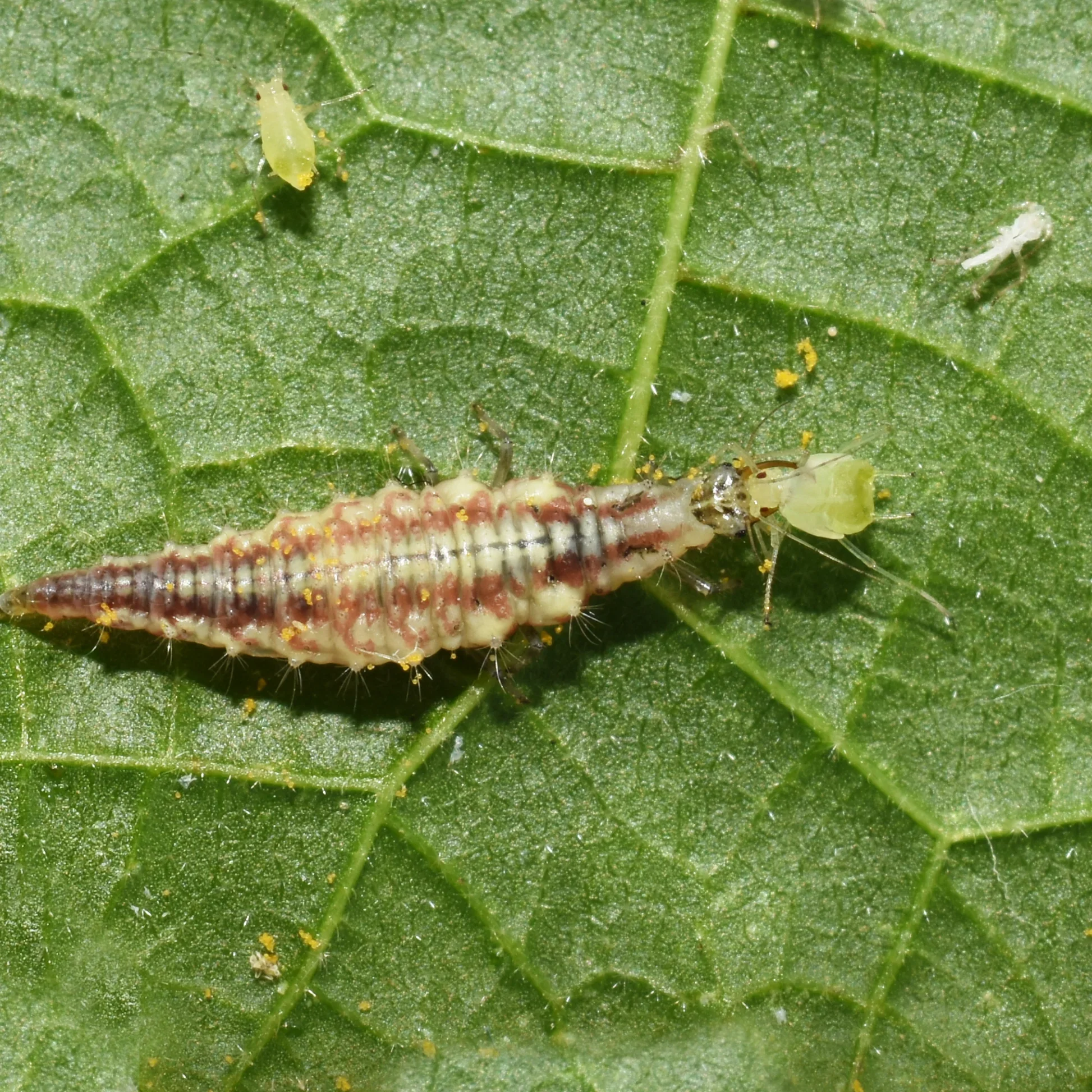
Lacewing larvae eating an aphid
Think of these little guys as the cleanup crew. They are aphid-eating machines. One lacewing larva can devour dozens of pests a day, including aphids, thrips, and even mite eggs. They are small, soft-bodied, and sometimes called aphid lions because of how effective they are.
If you find one on your produce, count yourself lucky. They are not harmful to people and they do not hang around long. Just give everything a rinse like you normally would and enjoy your greens.
Orius insidiosus (Minute Pirate Bug)
These fast movers hunt thrips, aphids, and even spider mites. Despite their tiny size, they are aggressive predators. We rely on them to protect our flowering crops like cucumbers, squash, and tomatoes. They move quickly and get the job done before the pests can cause damage.
You might spot one scooting across a lettuce leaf. No need to worry. They are harmless to humans and extremely helpful to our plants.
Aphidius Wasps (A. colemani and A. ervi)
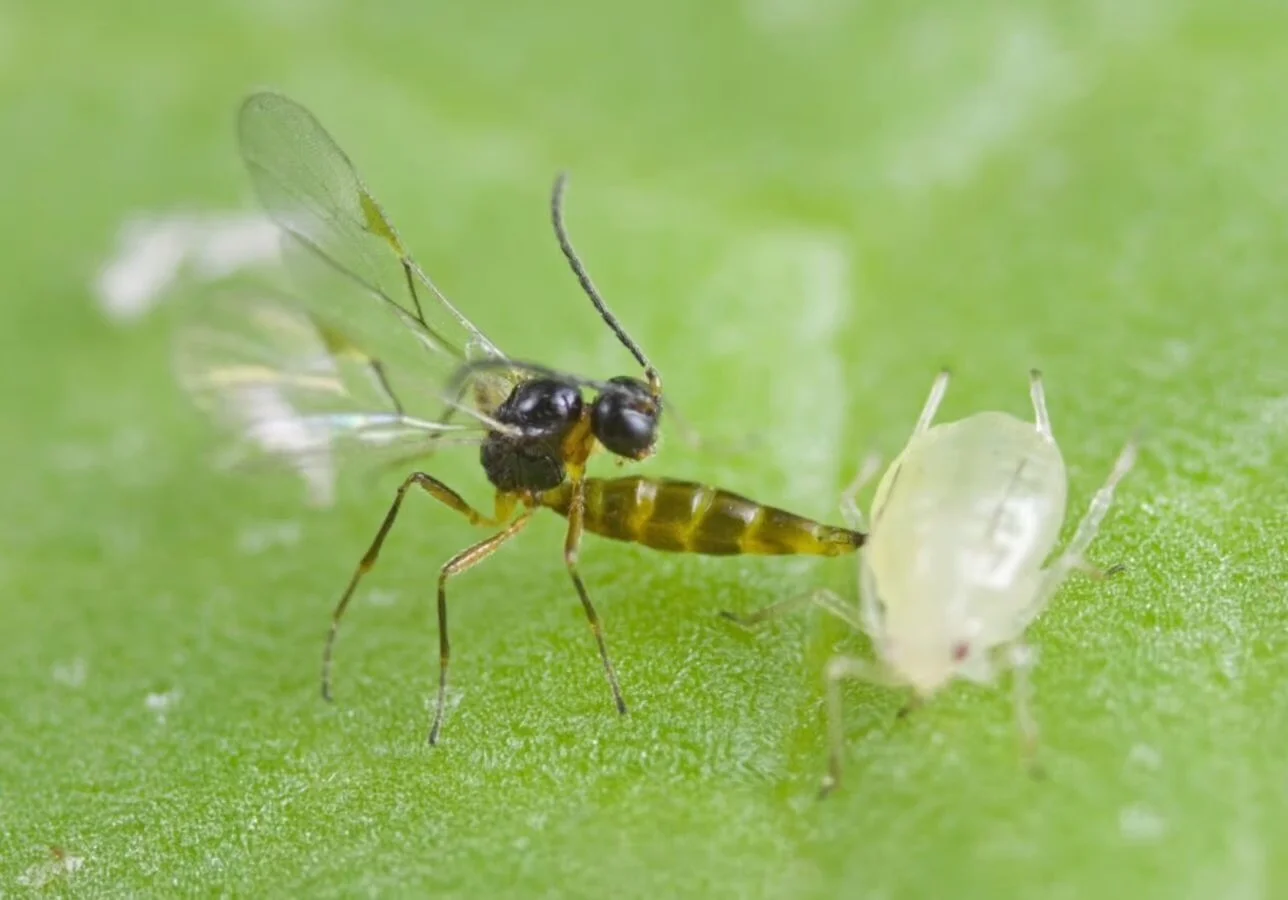
Wasp laying eggs in an aphid
These micro-wasps are so small you might miss them entirely. They target aphids specifically, laying their eggs inside them. As the new wasp grows, it stops the aphid from feeding and prevents it from reproducing. Nature takes care of the rest.
We know it sounds intense, but this is one of the most effective organic tools out there. If you ever see a dull, gold-brown aphid husk on your produce, that’s what you’re looking at. Just rinse and toss. It’s all part of how you get clean, vibrant food without heavy-handed sprays.
At Silver Stream, we’re committed to growing the highest quality produce. And that means protecting your food without poisoning your ecosystem. Beneficial bugs are one of the ways to do that. They’re natural, efficient, and part of a farming system that puts health first.
So if you spot a little critter in your box this summer, don’t panic. Give everything a good rinse. Then tip your hat to the hidden helpers who made that food possible.
Want to see one of these aphid hunters in action? We caught a ladybug and a lacewing taking down aphids in real time. Head to Instagram to watch them do what they does best.